Olin Shop
An academic makerspace, staffed mostly by students. Most of my work is helping someone get unstuck on a machine they have never touched before.
THE FLEET
Twenty-nine Prusa 3D printers: eight MK3S+, eight Minis, seven MK4S, and six Core ONE.
Belts loosen over time, gradually enough that nobody notices until prints start coming out wrong. Thermistors fail often enough that replacing them is routine, the way brake rotors are routine on a car.
The Minis just do not really have problems.
A separate room in the same shop holds the Stratasys F123 machines. I print on those, run student work orders, and do the simple service. The Stratasys training is someone else’s.
TRAINING
Three scheduled trainings: intro shop, Prusa FDM, and soldering. The Prusa one covers PLA and PETG, slicing, supports, and how we print here.
TPU is not a scheduled session. It is one to one, working through advanced slicer settings on whatever someone is actually trying to print.
TRAINING THE TRAINERS
I teach newer shop assistants to run the printer trainings themselves, and to maintain the machines. One and a half so far. One on my own, and one split with another assistant.
The authority is informal. Less than an RA, more the person you point at when someone in the shop has a question.
ROOM 303
The electronics rooms were a tale of neglect, inaccessibility and poor management. Then the building flooded. The Electronics Studio lost its own room and had to fit into 303, the stockroom next door, so two rooms became one. 303 was already full.
The surface-mount soldering training had already been developed in 303, before any of this. It let students build real PCBs instead of through-hole only, and it had nowhere good to happen.
So we rebuilt 303. Surface-mount work, power electronics and analysis gear open to anyone, and still a stockroom with component bins people can find things in.
the room being nice doesn't matter if people can't get into it
Shayla Arnold, provost, who had run an electronics space herself. Bradley Minch gave us the history of the room and pointed out that the classroom next door was the whole point: surface-mount work belongs beside where it gets taught, not across the building. Rachel Yang told us what equipment to keep and what to let go.
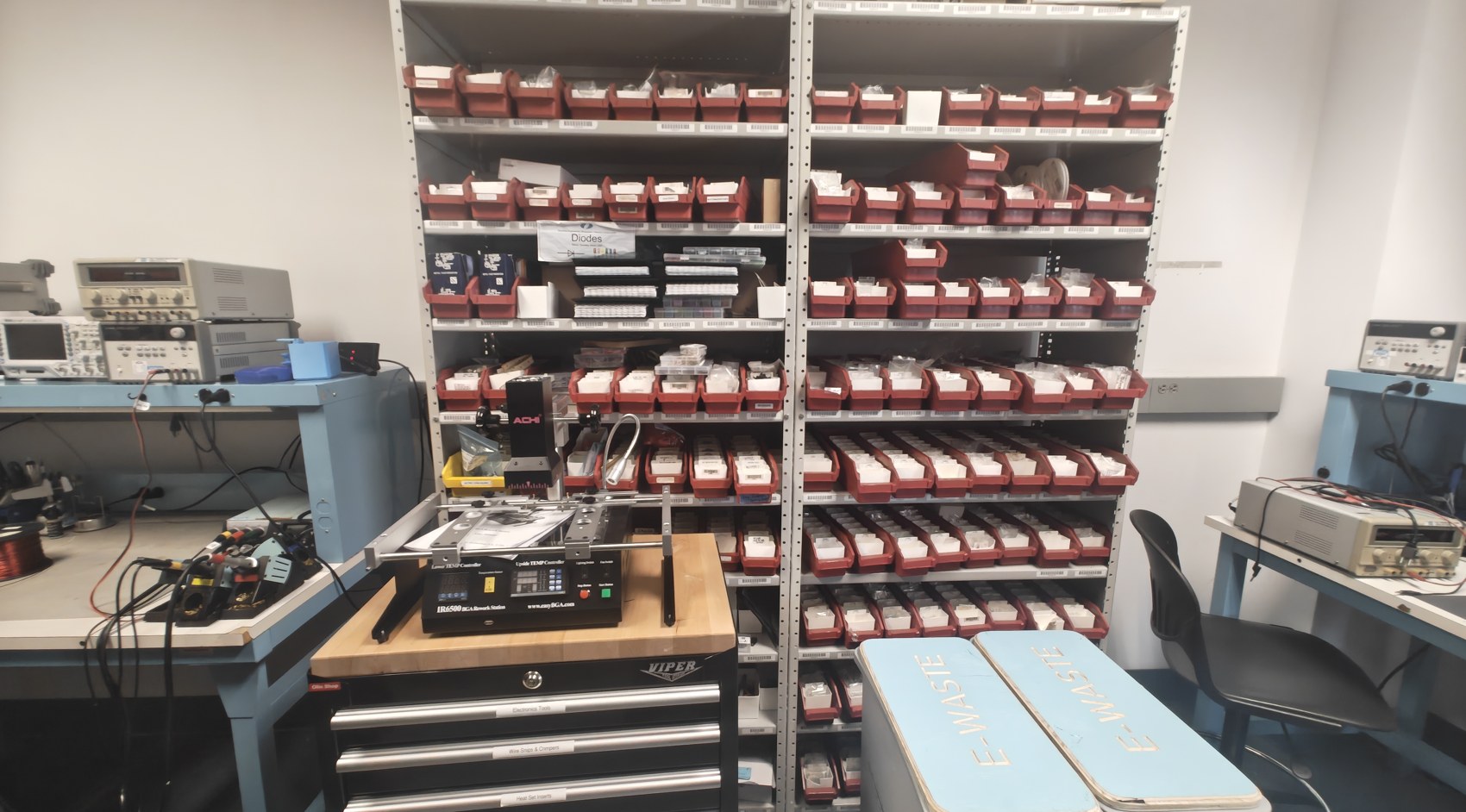
The stockroom before we started. Everything from the Electronics Studio, in a room that was already full.
TWO THINGS WE CHANGED OUR MINDS ABOUT
Clearing the clutter filled the hallway, and we realised the hallway could be part of the room. Analysis benches went outside. Anything that needs ventilation, soldering irons and hot air guns, stayed in.
Then we noticed electronics was the only shop space storing student projects inside it. That moved out too, onto a shelf in the corridor.
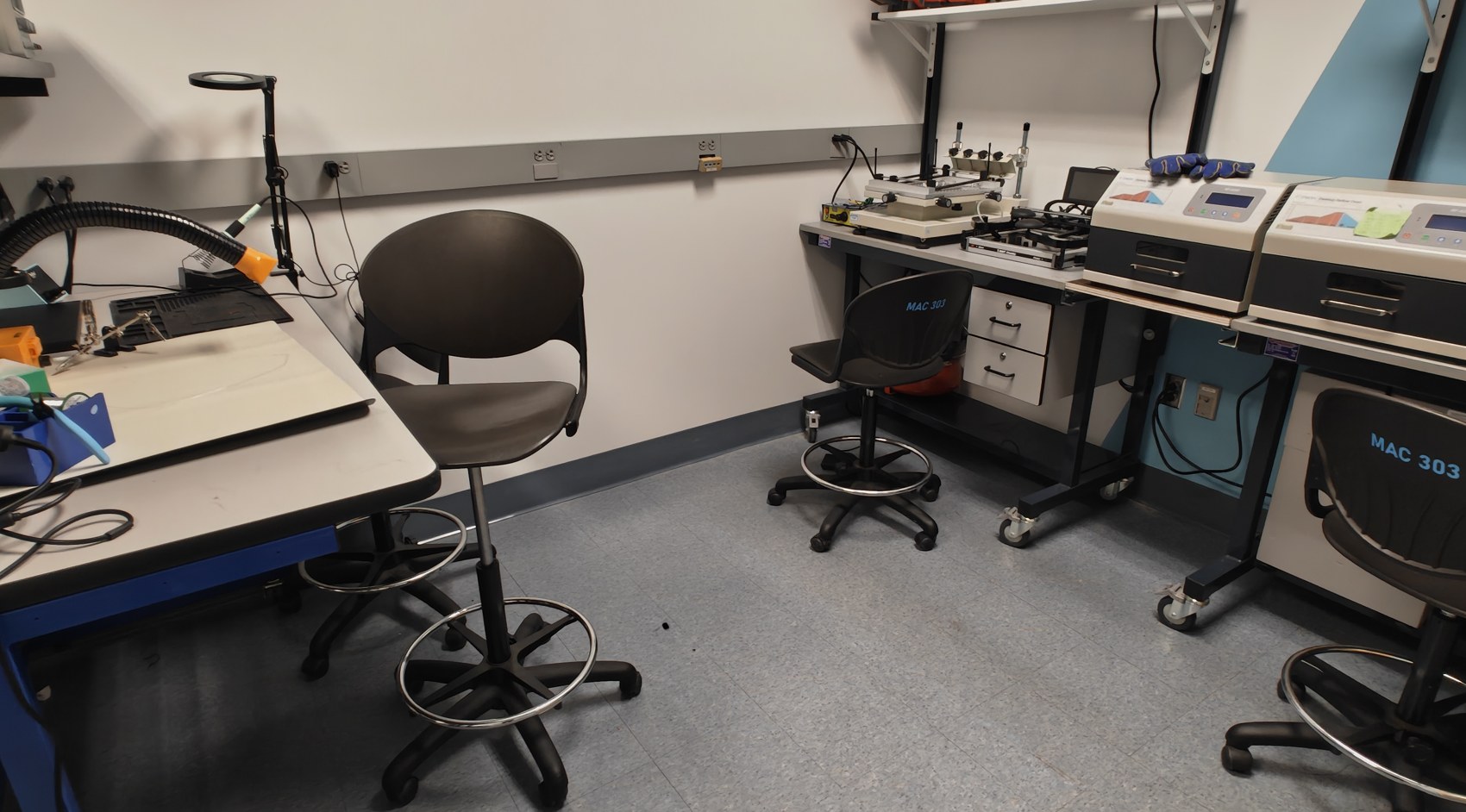
303 is done, labelled and sorted. It is not the stockroom any more, it is the Electronics Engineering Lab.
MAKERSPACE INSTITUTE
In July the shop hosted its first Makerspace Institute, with people from twelve institutions who came to see how a student-run shop actually works. Some ran established labs. Some were building their first space.
I led the electronics prototyping deep dive: the orientation, the soldering training, how it feeds into courses like PIE, and then everyone built a spotlight with an Arduino and a breadboard.
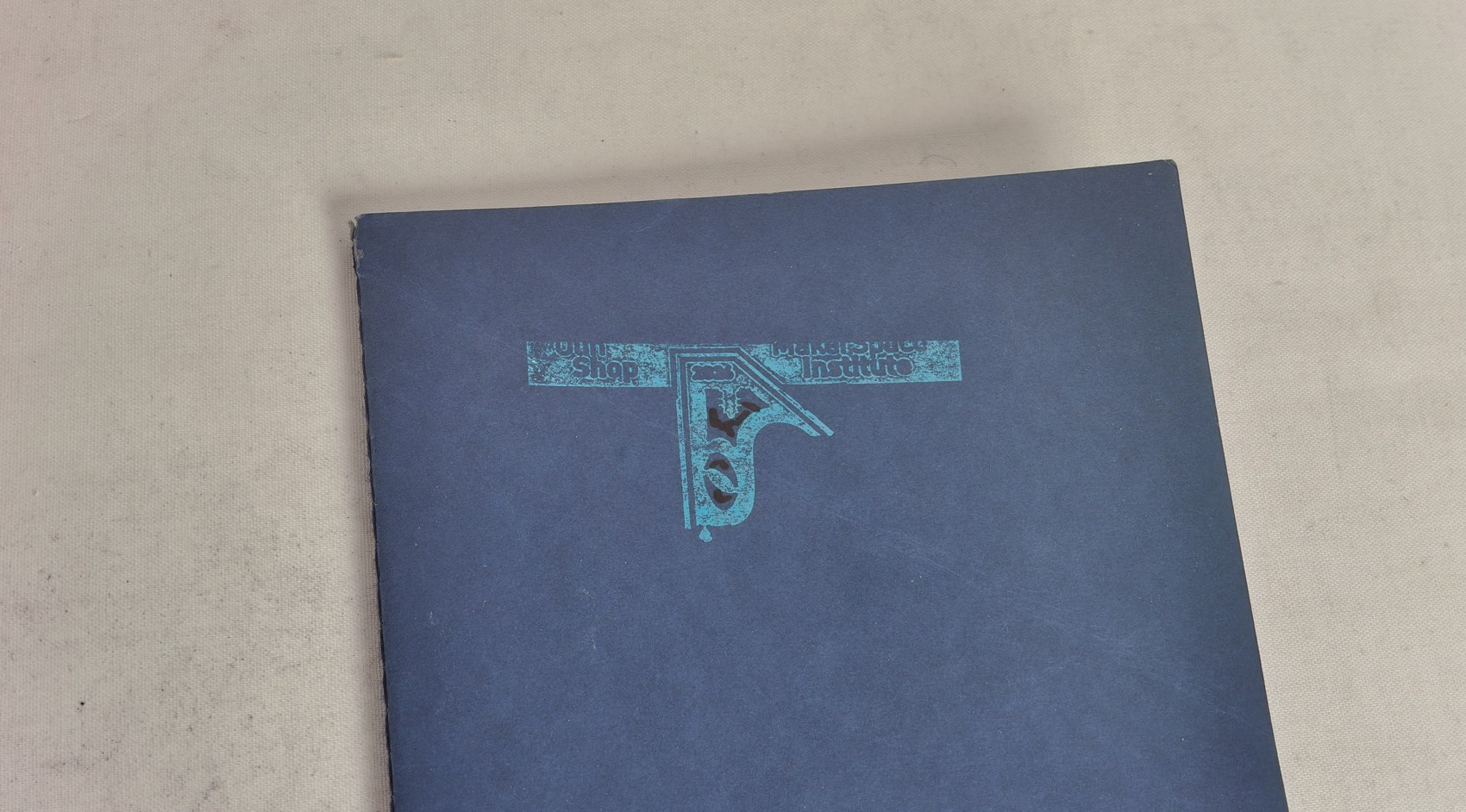
I also cut the brass stamp for the Institute logo on the Tormach. It pressed the foil into everyone’s notebooks at coffee break.